
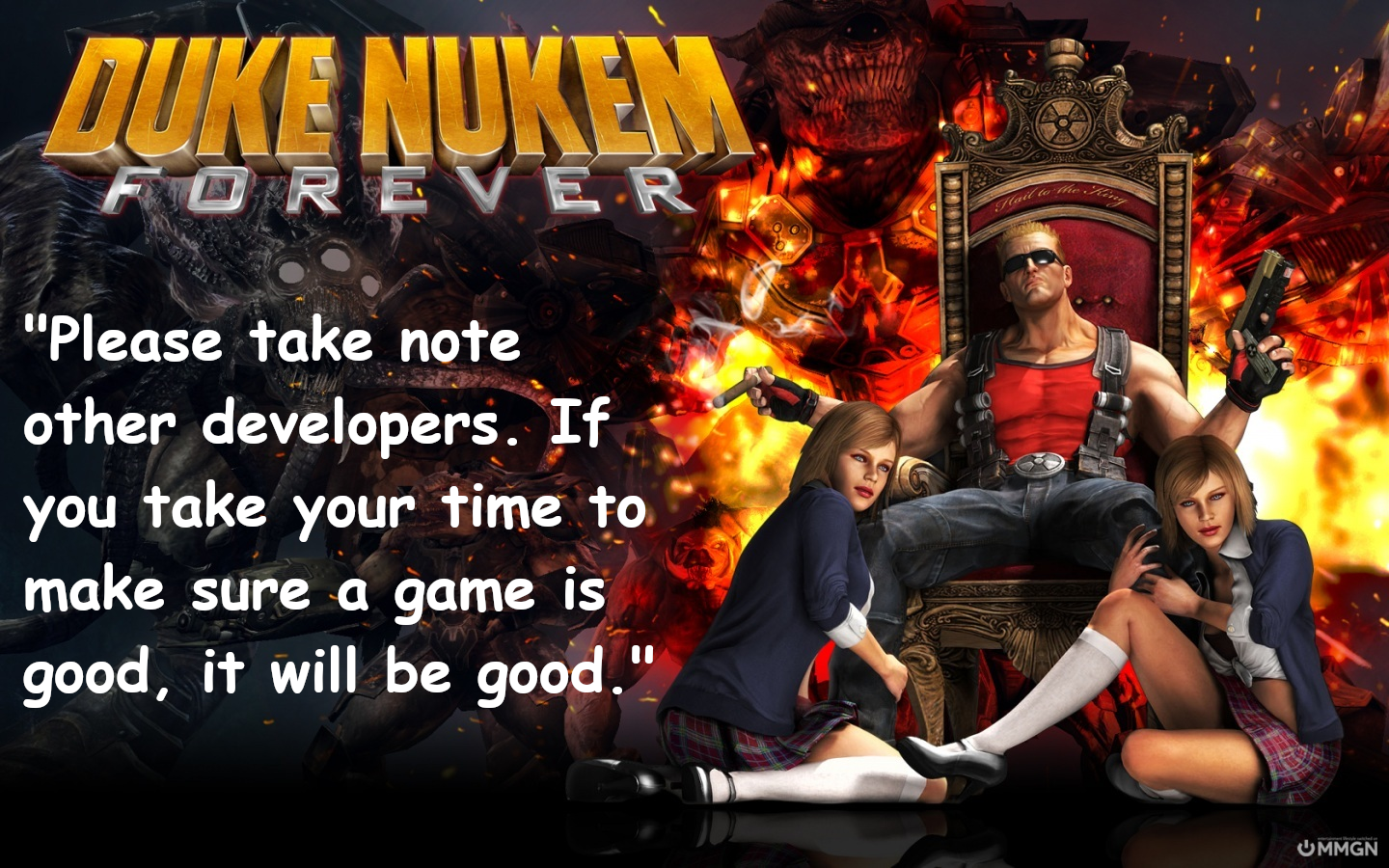
There is a thread going around about game budgeting that is getting some traction and, while I wish I could leave my thoughts to one tweet, there is a lot to get through. The thread concerns why large developers are not able to delay projects, and takes a frustrating reddit comment responding to an article about Tears of the Kingdom being significantly delayed for polish. Here is the thread:
I have small gripes about the thread (I think the EA foil isn’t consistent with how the company has seen itself or the considerable internal work they did in response to the Battlefront 2 lootbox response), but substantially I think it is useful and hope its intended audience finds it informative. As an objection to the quote everyone likes dunking on, I don’t think it is convincing at all.
The “please take note…” comment is the kind of haughty yet clueless criticism that feels like social media’s chief export and drives even the most serene readers to vexation. However, if we are going to engage with the comment, we should actually engage. Stripped of the presumptuousness the comment might be rephrased “I buy some games I’m excited for and then they’re not very good, but some of them really are very good. I found out the ones that are very good got extra time spent on them. Can’t you spend the time to make all of them good?” If this seems unreasonable consider the following:
You have a favourite Fish and Chip shop called Video Games. The sort of place you’ve gone to for a few years, you recognize the owners, they remember you, but you don’t regularly talk. One day you say “Hey, I’ve been coming here for a couple years now, and honestly, it’s because your stuff is great. Sometimes after a really tough day I go out of my way to pop in and get a treat. But sometimes things are off. Just last week, I’m fairly sure I could have removed the batter and released my cod into the wild. I know sometimes things are busy, but is there any chance you might be able to take a bit more time to deliver that awesome product I know you’re capable of?” There are lots of answers here, but the one that is going to piss you off is the owners explaining how the rent’s gone up, how you cannot believe the cost of repairing a deep fryer, and, by the way, you always pay by credit card so that makes it harder to keep the place open. You just want a good meal, and might consider that Netflix place down the road next time.
Suppose instead that the owners said “We completely understand. We eat here as well, and we’ve had the exact same thing happen to us. The problem is we’re funded by Fat Cats in Top Hats Inc., a conglomerate run by dapper felines, and they only dispense the next order of fish once we hit a certain quota of dishes served. We simply cannot afford to remake every dish that goes wrong, but we do our best.” The obvious reply is “Well can’t we talk to Fat Cats in Top Hats Inc.? This doesn’t sound like a very good way to run things.” If nothing else that answer does nothing but make the Netflix joint look even more appealing, even if they changed the seating so everyone’s is sitting solo at a table.
The comment is frustrating, but pushing the problem one step down the chain is not an explanation. The thread actually seems to accept the premise that games are being kicked out the door before they are ready, and I think that is a greater concession than we should be willing to make.
The only relevant factors for a game are forward looking ones. A developer can spend $700 million on a title that completely reinvents video games, but if the choice is to spend $7 million more to finish the project, and its prospects are to get $5 million back after release, it doesn’t matter that the costs are “just 1% more”, the result is the same as setting fire to a pile of money. Real world decisions face greater uncertainty, but the point is that the $700 million is a sunk cost that is not relevant to the decision. Spending another $700 million is justified if the outcome is $700 million + $1 (still a net loss for the developer) or $3 billion. Spending $5 is unjustified if the outcome is $4, even if the $5 is to stop the entire project from being deleted (the outcome here obviously accounts for the total value of the project including reusable assets etc.).
The Reddit comment is probably not speaking to independent developers, and independent developers do work with publishers, but the fact that there is a segment of the gaming market that is trying to operate outside a system of milestones is evidence that a significant of developers do not find it consistent with fulfilling work or the best product. However, these developers still face a very real system of cash inflows and outflows and this means they must make choices in terms of what projects they make, how long they take to make them, and what they do when things don’t go according to plan. Even Valve, notorious for its willingness to sand down every sharp corner and in possession of seemingly limitless resources, has been willing to shut down projects in favour of directing its efforts to more productive work.
To put this in perspective, consider a team of 5 people creating a game. I took an average of the estimate for the poverty line in the Canadian cities with the largest concentration of developers only considering “persons not in economic families.” In order to fund development for another year, it would cost this team $116,028, working at the poverty line, paying them under the table to avoid taxes and other contributions, expecting them not to support anyone, and sneaking around public libraries in lieu of an office. Budgets not easy to get a good estimate of, but the Gamemaker website quotes Auroch Digital in estimating a budget between $50,000-$700,000 (and I suspect this will raise a few eyebrows for being too low but this is probably because of a loose definition for indie). Ignoring the exchange rate, this means that a year of polish is anywhere from 16.5-200.3% of the budget. From the same article, keeping this team working in impossible and inhumane conditions costs about 4/5ths of an Angry Birds. Paying them the median income raises the cost of that year to $314,000, almost half the upper bound of that budget estimate. I cannot think of any other industry in the world that would accept half of a project’s budget going towards “polish.” Furthermore, returning to the idea that decisions must be based on the expected outcome, none of these values have included marketing, despite the fact that a year delay implies getting the word out that the game is delayed and that it is still worth buying. Not only does it cost more, the potential outcome is worse than an imperfect release without additional expenditure.
None of this means that customers necessarily have to be happy with releases that do not meet expectations. Not every game is going to go according to plan, and a project that seems promising in earlier stages may not hold up when confronted with the actual business of implementation. There is a reason why everyone seems to have an idea for a video game but so few of them get made. Despite the frustration with them, milestones keep cropping up in decentralized ways. The viability of certain projects is evaluated through crowd funding. Early Access carries the warning that the game is being bought “as is” and the developer is not under any obligation to release the full product. Some projects may be scoped down, and receive later support if the underlying promise of a game is realized. It is worth noting also that even projects that aren’t successful often receive considerable support after release. The fact that this is now an expectation often goes unacknowledged in complaints about the states of games on release.
None of this touches on the silliness of the premise that quality is some monotonic function of effort. Games can and do get worse over sufficiently long development times, and determining what is an acceptable imperfection bears a frustrating resemblance to assessments of cool. Skyrim can have NPCs swimming in mid-air declaring “The gods know what you have done” and, if anything, this is perceived as enhancing the experience (for good reason. It’s a good clip). The same bug in an unknown title may lead it to be dismissed as a low-effort product and make it the subject of ridicule. Bethesda’s the cool kid, the unknown title is the nerd who came to school with sunglasses and a leather jacket expecting people to treat him differently.
The thread does a good job of highlighting what are likely unappreciated factors that lead to the state of releases as they are, but it runs into the problem of accepting the premise of the original post. We should not wish for extended development cycles, especially given the types of stories that usually emerge from delays. Even if a customer is indifferent to the state of the development team, they should be careful what they wish for. An excessive demand for polish ultimately comes at the expense of a willingness to take risks, either through the need to cover increasing costs or an unwillingness to annoy The Gamers. If the fish and chip shop started serving perfect porridge, I might still wind up going over to that Netflix place.
 SystemTalk